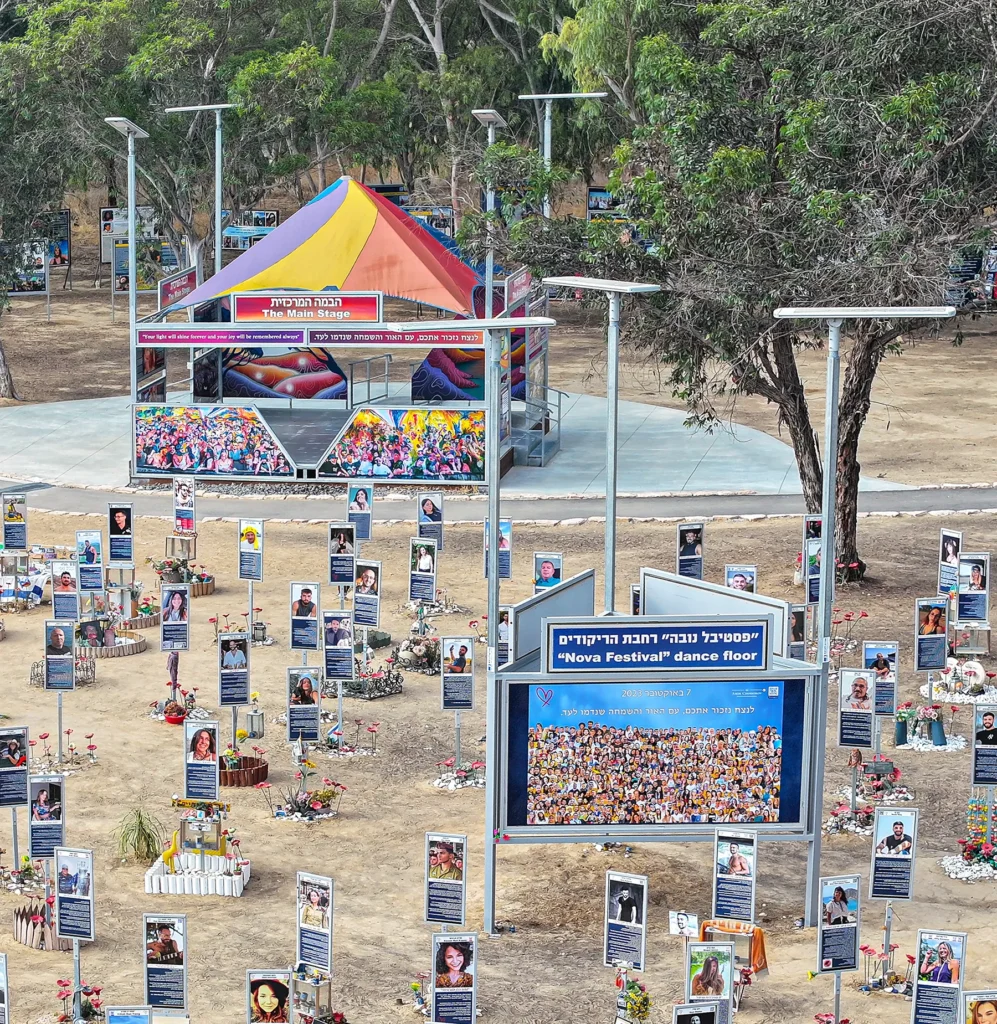
NOVA Memorial Site

“Your light will continue to shine bright and your joyous laughter will forever be remembered”

The Central Collage

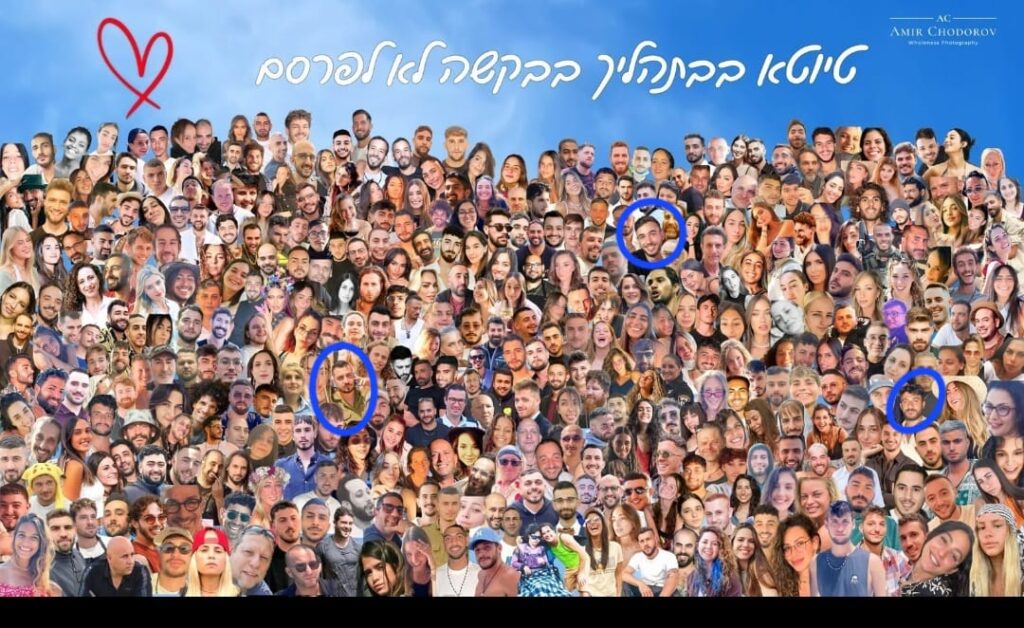
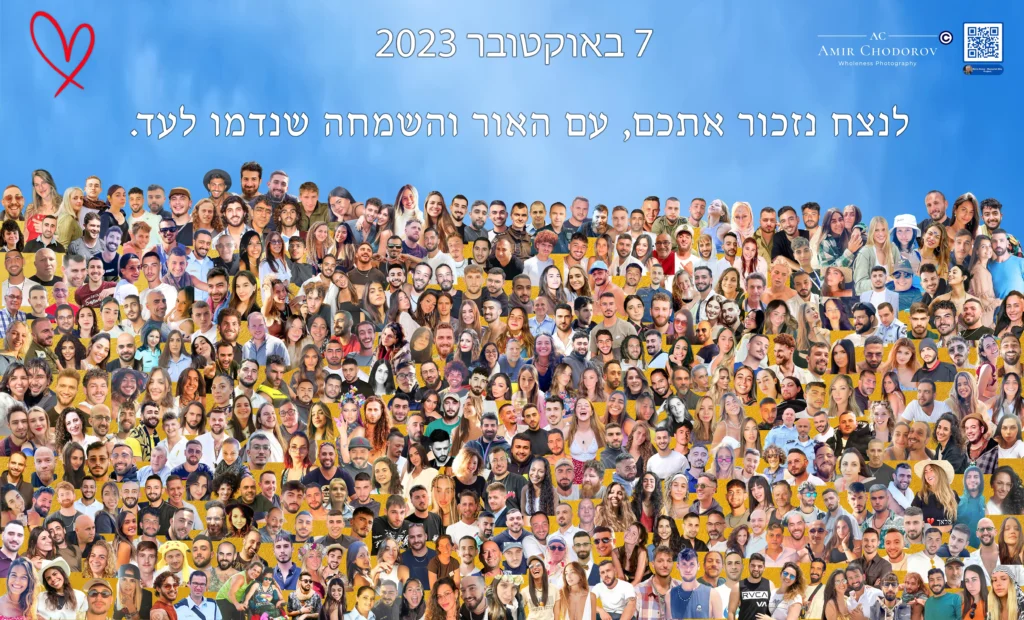
The Central Collage was created by Amir Chodorov, the initiator and director of the memorial site. Here is the story of the project, described from his point of view.

It all began on December 31, 2023, with a chance encounter I had at the Beit Dani Community Center in Tel Aviv with Sigal Shemer, the mother of the late Ron Shemer, who was murdered in the Gama West Shelter. During our conversation, we raised a painful question: How can we commemorate hundreds of people, who do not share a single communal identity?

Since those first moments, we understood the magnitude of the challenge. The victims came from all corners of the country and the world, from all shades of Israeli society – a rare human mosaic that was joined together out of pure love for life, and in one morning was cruelly ripped apart. I knew that if we didn’t weave together the many threads of the victims’ lives, the personal stories of each and every one of them would get lost in the collective memory.

The idea that changed the course of my life was born out of this understanding: I decided to create a single, living and pulsating collage – one that was composed of all the faces of those who had been murdered, and of those who had fallen, at these parties in the South.
The Stories Behind the Faces

I took on the task on a full volunteer basis. Sigal sent me the first 250 photos, and the first version of the collage was born within just five days. But then the WhatsApp messages began to arrive: messages such as “Put Eli adjacent to his sister Sharon”, “Put Shahar next to his partner”.

The more time I spent organizing the photos, the more I delved into the chilling stories that were woven into them: a father who went out to save his daughter and never returned; two brothers and a daughter-in-law in the same family who were murdered together; couples who were not separated even in their deaths; and childhood friends who shared their last moments together. The number of murdered was no longer an abstract figure for me. These were individual people, faces and dreams that had been cut off. And that was exactly the moment when my heart broke into pieces.

The WhatsApp messages didn’t stop coming in – about 150 messages every night. Together with Sigal, we made a decision: I would work directly with the families. I wasn’t satisfied with just placing the photos; I had to know, to understand and to feel the people behind them.

On Tu B’Shvat, January 21, 2024, I arrived at the Re’im parking lot before dawn to put up the collage. The silence there was deafening. On the ground of the dance floor, there were still metal pegs with improvised cardboard pictures on them – solitary memorials that the families had put up there in the first days after the massacre.

When the first light broke, the families began to arrive. There, among the dusty paths, I saw the pain reflected in the faces of the bereaved families I met. I met parents, siblings, spouses and children whose worlds had been destroyed. Every hug felt like a knife in my heart.

“Love your neighbor as yourself”

I was faced with a choice between two ways to tell the story: one way was to tell it through the terrible deaths and the horrors the victims experienced, and the other way would be by telling of their lives – who they were when they were with us, what they loved and how they live on in our memory. I chose life.

Since then, I have gone through thousands of different pieces and types of memories. More than 6,000 videos, countless photos, messages and testimonies. Out of all of these, I tried to create displays and to write words that would bring the light back to this parking lot, even if only some small part of what had been there before.

During this journey, I was exposed to the stories of many heroes, including young men and women who chose to stay in the field and help others to escape, even at the cost of their own lives. Alongside them were dozens of policemen and policewomen, who almost without anything in their hands descended to Nahal Gerar, armed with only pistols. With their bodies, they stopped the terrorists’ advance and gave thousands of people valuable time that allowed them to escape and to be saved.

For me, their actions are the deepest expression of the commandment to “love your neighbor as yourself”. They left behind not only stories of heroism, but also a legacy of human love, mutual responsibility, and caring for one another. With this recognition, I promised to continue to tell their stories where it all took place, and to dedicate my path to the establishment of the national memorial site.

My hope is that the site will be more than a place of remembrance. My hope is that it will be a place where future generations come recognize the people we have lost, learn from the values that guided them, and continue to carry on with those values. If we succeed in preserving the legacy they left behind, perhaps some hope will be able to grow out of the immense pain, and their memory will become a moral compass for Israeli society as a whole.

error: תוכן האתר מוגן