At the end of the shiva for his son Ron, who was murdered in the Yellow dumpster, Yoram Yehudai arrived at the Nova party site to find the actual dumpster. To his astonishment, he discovered that it had been removed from the scene. For five months, he did not stop looking for it, until he managed to locate it in March of 2024, at the garbage disposal contractor who had originally brought it to the site and called to tell me about it.
We couldn’t bear to think that the dumpster in which Ron and other young people took their last breaths would continue to be used to collect garbage. We acted quickly, purchased a new dumpster and handed it over to the contractor in exchange for the original Yellow dumpster.
For me, locating the Yellow dumpster was the beginning of a difficult and moving journey toward the discovery and telling of its story, and especially toward the recounting of the story of the young men and women who lost their lives in it.
I learned of the feeling of horrific fear, of the desperate cries for help and of the great pain left behind because of the loss of these murdered young people. I learned of all this from the conversations I had with the survivors, who agreed to provide detailed, minute-by-minute descriptions of what happened in the dumpster over the course of the many hours they hid there, and from reading the WhatsApp messages that sent by the hiding people to their families.
I learned about a pair of twin sisters of whom only one survived, of an only son of parents who were left bereaved, of a loving couple who dreamed of a common future and only the woman survived, and of an engaged couple, instead of standing together under the canopy, were buried side by side, united in their deaths.
Alongside these heart-wrenching stories, I was exposed to the personal world of each and every one of the murdered men. I met smiling and kind-hearted young men and women, who were full of the joy of life and strong values – individuals who chose to help others and to try to save them even in the most desperate moments.
When I was asked what I was going to do with the Yellow dumpster that we had managed to preserve, the answer immediately came to me: “I’ll bring the victims back to life, specifically in the dumpster where they lost their lives”.
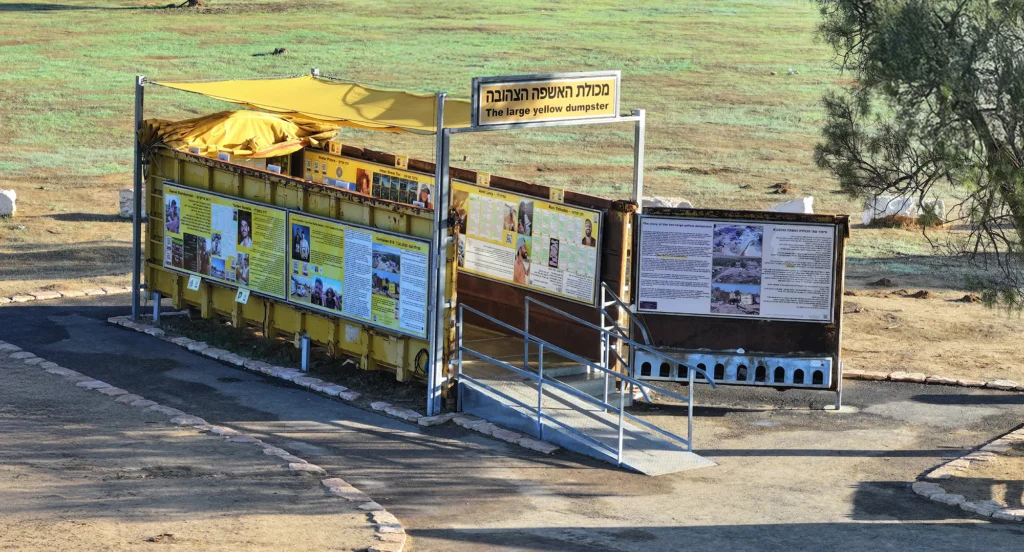
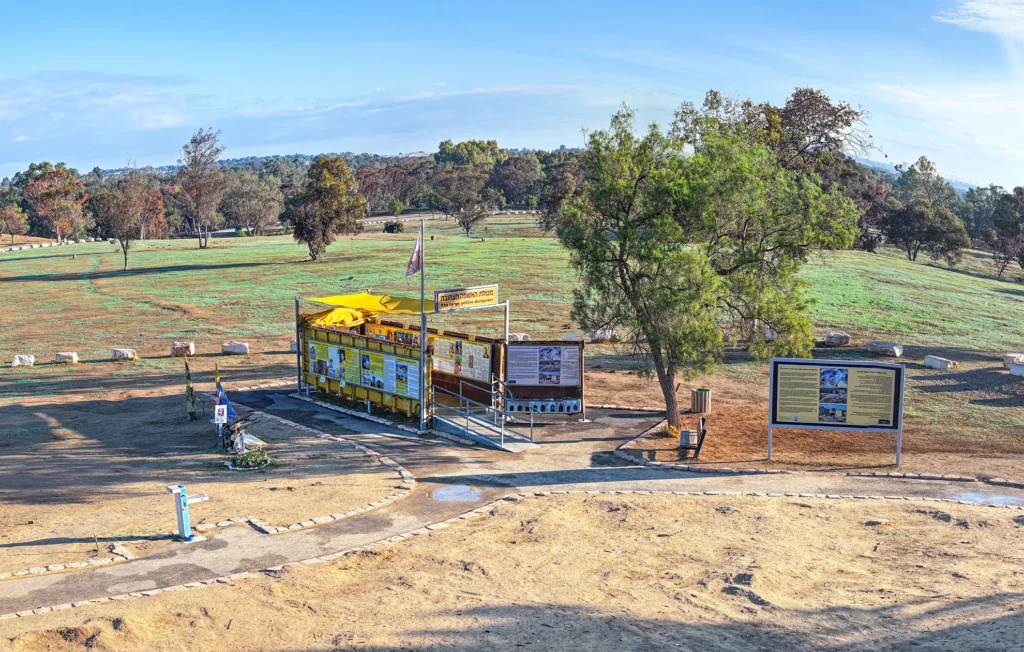
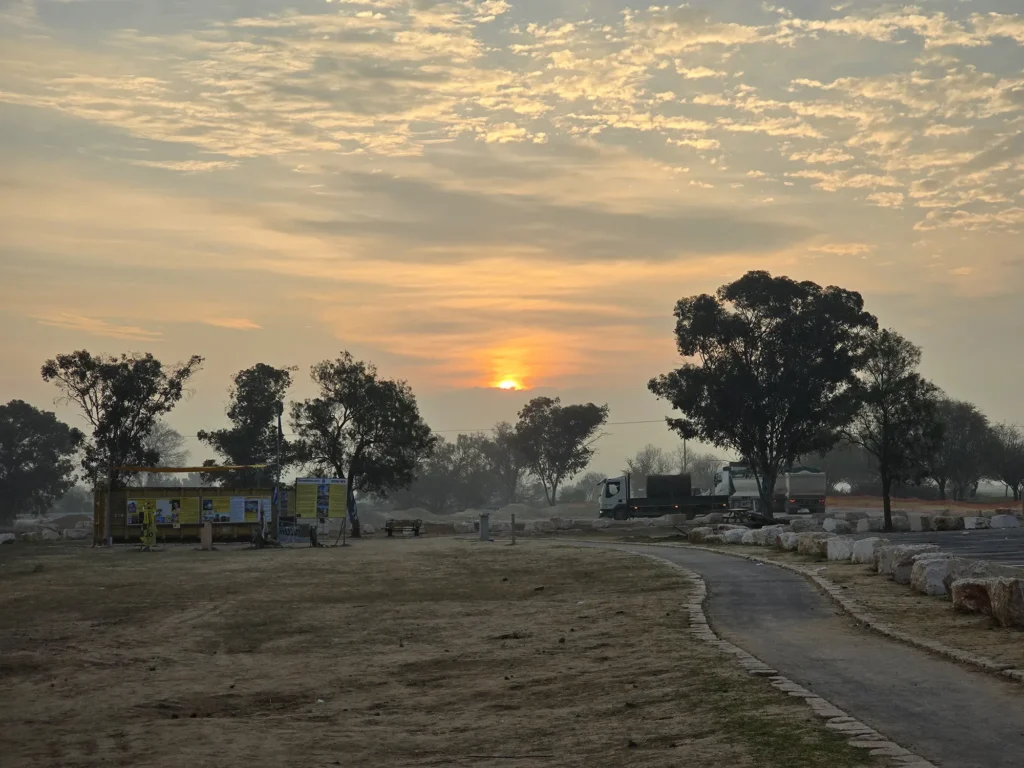
On August 7, 2024, exactly ten months after that terrible day, the Yellow dumpster was returned to the exact spot where it had stood that morning. In and around it, I chose to present the life story of each and every one of those murdered there, along with screenshots of the messages they sent from within the dumpster, during their last hours.
The commemorative signs reveal the personal worlds of those who are being commemorated: what they believed in, who they loved and what else they dreamed of becoming. Their WhatsApp correspondence with their parents, siblings and friends expresses with painful simplicity the moments of terror, the sense of helplessness and the pervasive understanding that they had been left alone.
Their smiling faces and the words of farewell they sent in the last moments of their lives transform the Yellow dumpster from a place that bears witness to the horror and indiscriminate slaughter, to a place that allows visitors to meet them as they were when they were alive, as they were just a few hours before.