
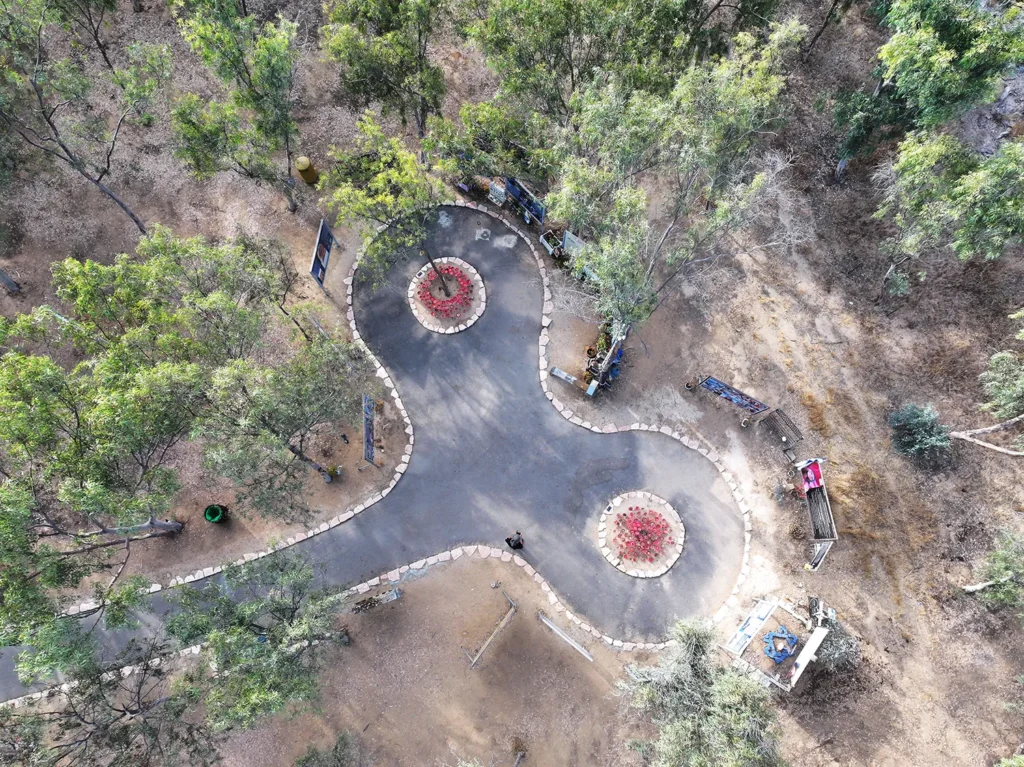
NOVA Memorial Site

“Your light will continue to shine bright and your joyous laughter will forever be remembered”

The Ambulance Compound

The ambulance compound was established at the place where the Nova Festival’s medical security ambulance stood, and it is dedicated to commemorating the men and women who were murdered there on the morning of October 7, 2023.

The compound was designed and built by artist Amir Chodorov, the initiator and director of the Nova memorial site, together with his partners in creating the memorial displays at the site, Jojo Rabia and Yohai Rivlin. The story of the compound is presented below from Amir’s point of view. During the Hamas terrorists’ invasion of the party grounds, the ambulance became a hiding place for dozens of people trying to save their lives. The terrorists who discovered those who were hiding fired at them, threw grenades into the ambulance, and eventually launched  an RPG missile that set the ambulance and all those trapped within it on fire. This event that later earned the vehicle the nickname: “The Ambulance of Death.”

The intensity of the severe fire obscured the findings at the scene and made the task of identification very difficult. The identification of all the murdered people was completed only at the end of a complex and lengthy process, which continued even after the initial burials of victims, and all those who were identified were eventually given proper burials.

In memory of the men and women who were murdered in the ambulance or next to it:

Alina Palahati
Elyakim Shlomo Libman
Alexander Samoilov
Arik (Aryeh) Peretz
Bar Tomer
Victoria Gorelov
Ziv Frenkel
Sgt. Major Yulia Waxer Daunov
Lior Atton
Lynn Daphne
Moriah Or Suisa
Matan (Kido) Elmalem
Noam Shalom
Karin Giorno
Ruth Hodaya Peretz
Shir Hana Georgy
Shani Gabay
Sharona Shmonis Harel
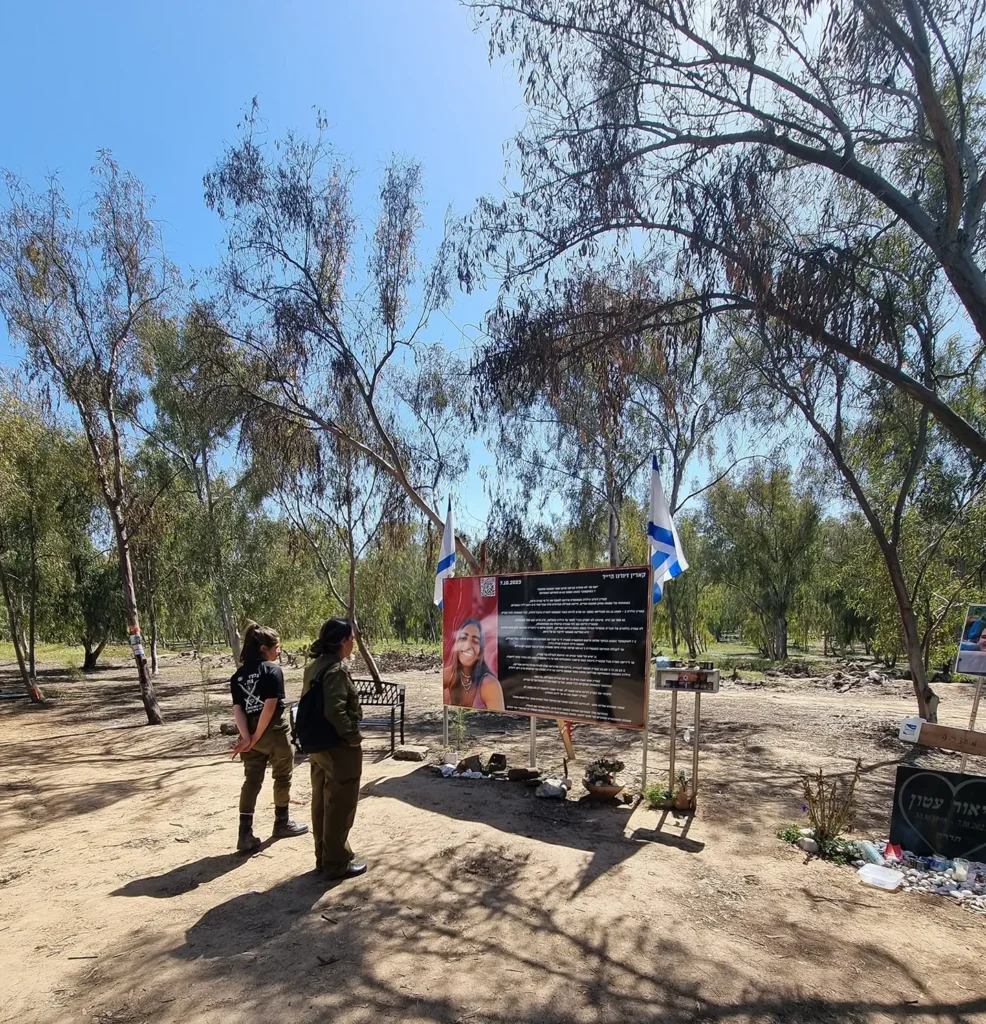
The mother’s request that began the memorial

Amir writes:

On  January 21, 2024, I placed the first collage on the dance floor, featuring photos of 375 murdered men and women. It was the first step in the construction of the memorial site, and the collage was much smaller at that time than it is today. While I was there, I met Inbal and Doron Giorno, the parents of the late Karin Giorno. My meeting with them led to the establishment of the memorial in the ambulance compound.

Karin had arrived at the party with a broken leg, after her friends persuaded her to join by telling her that the party would not be the same without her there. Her parents told me that she was among the men and women who were found dead in the ambulance that had been set on fire. All that was left of her body were two teeth, which were buried at her funeral.

For Inbal, Karin’s mother, the place where her daughter lost her life is also the place where she is buried. She asked me to place a sign in her memory at that exact spot. I chose a large picture in which Karin is seen smiling, so that her face would be visible from afar and would signal to visitors to come closer and get to know her. Out of respect for Inbal’s request, and because of the deep meaning that this spot carries for her, that first sign that I put up there remains in place to this day.

The meeting with Inbal and Doron thus became the starting point for the creation of the memorial at the ambulance compound. Karin’s picture was gradually supplemented by the pictures of the other men and women who had been killed there, and the creation of the ambulance compound display developed from this. Each photo that was added brought with it a face, a name and a life story. Together they preserve the memories of the victims, in the place where they lost their lives.

error: תוכן האתר מוגן